Last updated:
A supply pipe can leak for months without a damp patch, because the water drains down into the ground instead of up. On a water meter you pay for every litre of it, and the first sign is usually a bill that has doubled or tripled. Underground water leak detection finds the exact spot on the buried pipe so it can be fixed through one small hole.
The supply pipe runs from the boundary stop tap, usually in the pavement or at the edge of the drive, to the stop tap inside your house. Severn Trent says that pipe belongs to the homeowner, even where it crosses someone else’s land. So when the meter shows water going missing on your side, finding it is your job.
What we do on the first visit
The visit starts with the stop taps. With the internal stop tap closed and nothing running, the meter should stand still. If it moves, the loss is on the buried supply pipe. If it only moves with the internal tap open, the leak is inside the house, which is a different job.
Next comes the route. The supply pipe rarely runs in a straight line from the meter to the kitchen, so we trace it and find out what it is made of. Older Nottingham homes may still have lead or iron. Newer and replaced supplies are usually blue MDPE plastic. The material decides which method will work best.
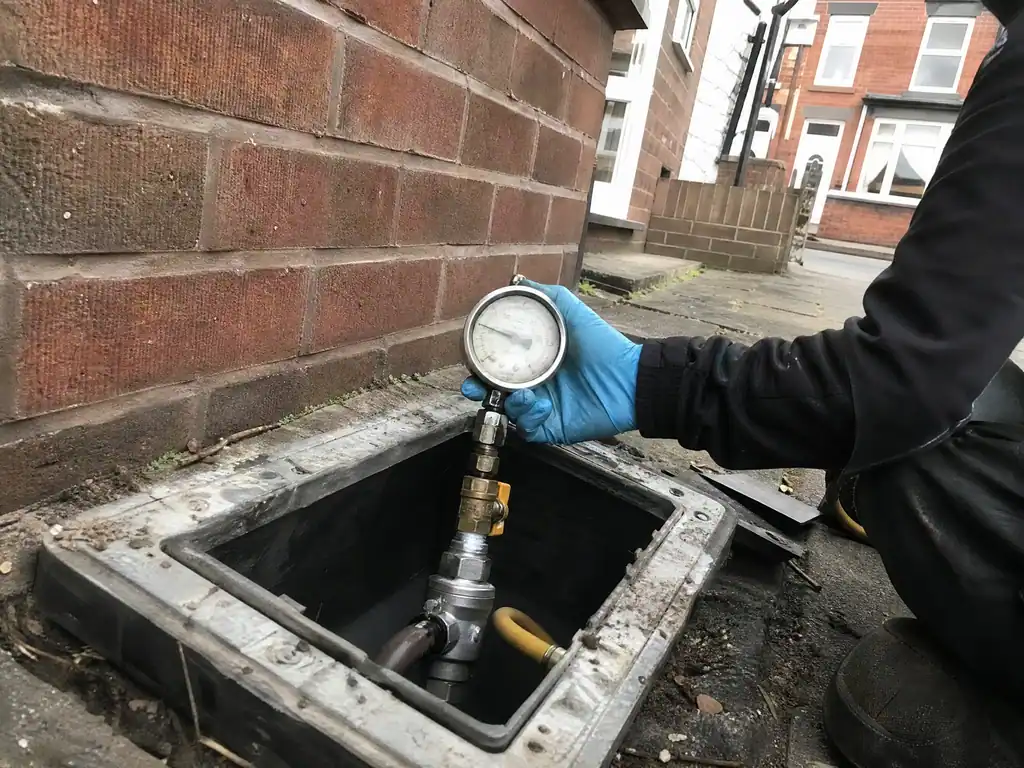
Then a pressure test on the supply pipe confirms it is losing water, before any time is spent listening for the leak.
How the leak is pinpointed
Acoustic ground microphones
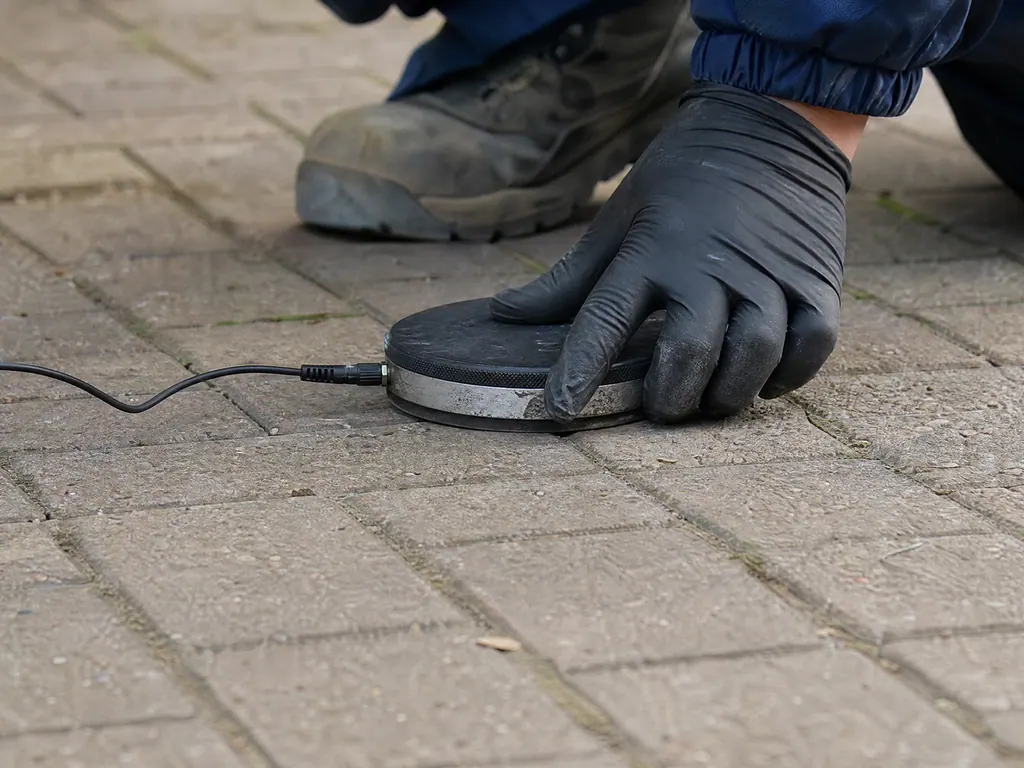
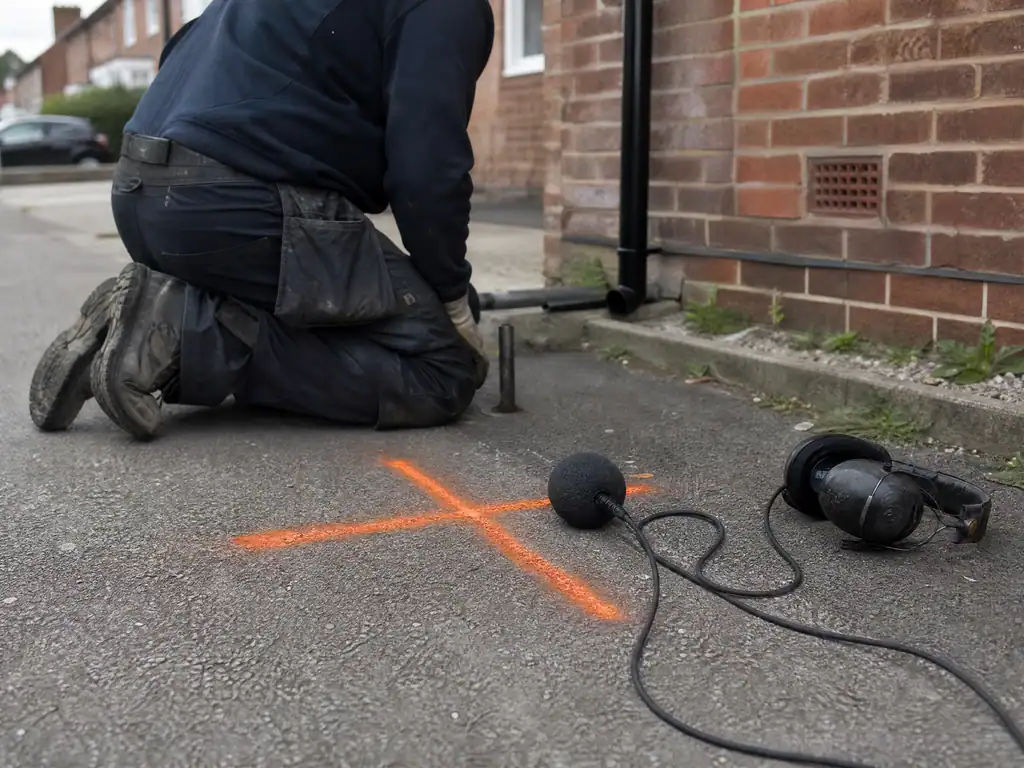
Water escaping under mains pressure makes a hiss. A ground microphone placed on the surface every metre or so along the route picks up where that noise is loudest. It works well on metal and lead pipes. Plastic pipe carries sound much less well, so a quiet leak on MDPE can be hard to hear.
Leak noise correlation
Two sensors go on fittings at either end of a section, such as the boundary stop tap and the internal stop tap. The correlator measures how long the leak noise takes to reach each sensor and works out where between them it started. This needs access to the pipe at both ends.
Tracer gas
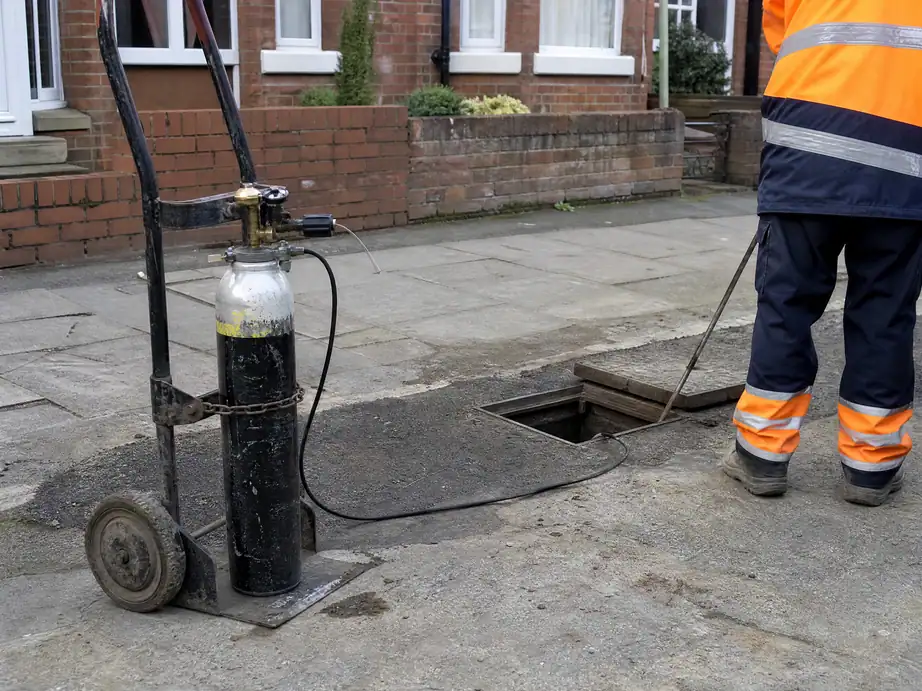
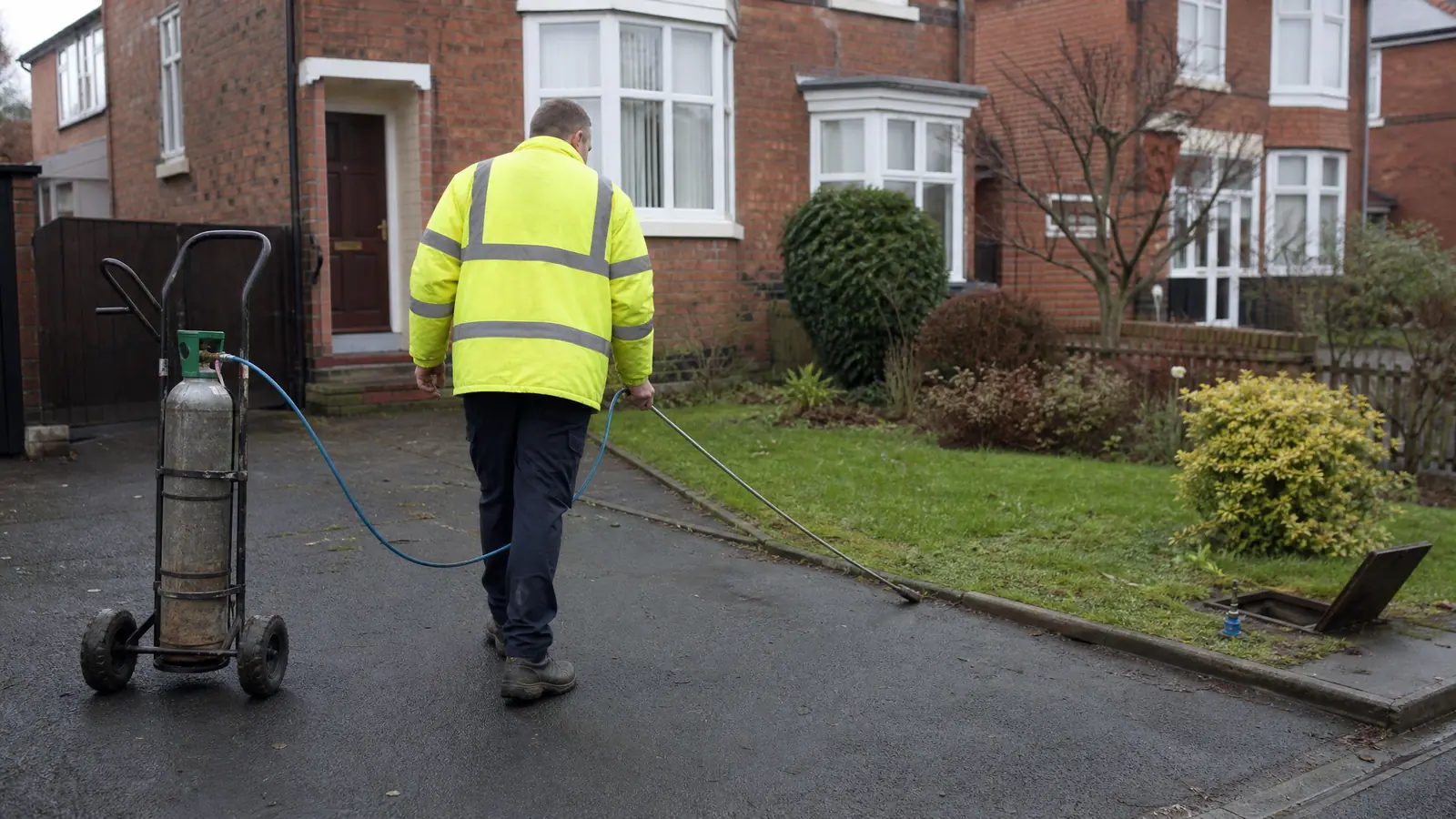
When a leak is too quiet to hear, the pipe is drained and filled with a non-flammable mix of 5% hydrogen and 95% nitrogen. Hydrogen is the lightest gas there is, and it works its way up through soil, tarmac and paving joints. A detector swept over the surface finds where it comes out. This is the method for deep plastic pipes and leaks under hard standing.
Meter step tests
On longer or branched supplies, such as a pipe that also feeds a garden tap or an outbuilding, valves are closed one section at a time while the meter is watched. The section where the flow stops is the one with the leak.
Paying for it: insurance and Severn Trent
Two things can bring some of the money back.
Many buildings insurance policies include trace and access cover, which pays to find a leak and to open up and make good the area around it. Most do not pay to replace a worn-out pipe, and limits and excesses vary. Check the policy schedule before you book, and see what trace and access covers.
Separately, once a supply-pipe leak is repaired, Severn Trent can refund the water you lost as a one-off. It covers up to 12 months or two bills, based on actual meter readings. The repair has to be done first, so keep the invoice and the leak report together. How the Severn Trent leak allowance works goes through the claim step by step.
What's included
- Meter and stop-tap test to confirm the leak is on your side
- Supply pipe route traced from the boundary to the house
- Pressure test of the supply pipe
- Acoustic ground microphone survey along the route
- Leak noise correlation where there are fittings to connect to
- Tracer gas if the leak is too quiet to hear
- Leak position marked on the ground
- Written report with photos, method and next steps
How the options compare
How the leak is found
- Do it yourself
- Following the wettest patch
- Dig-and-hope operator
- Digging trial holes
- Proper leak detection
- Meter test, then acoustic, correlation or tracer gas
What gets dug up
- Do it yourself
- Whatever looks likely
- Dig-and-hope operator
- Trenches until it turns up
- Proper leak detection
- One marked hole for the repair
Plastic (MDPE) pipe
- Do it yourself
- Very hard to trace
- Dig-and-hope operator
- Hit and miss
- Proper leak detection
- Tracer gas finds leaks that make little noise
Paperwork afterwards
- Do it yourself
- None
- Dig-and-hope operator
- An invoice
- Proper leak detection
- Written report for Severn Trent or your insurer
If the pipe is shared
- Do it yourself
- Unclear whose section
- Dig-and-hope operator
- Often argued over
- Proper leak detection
- Leak located on the traced route