Last updated:
Water supply pipe replacement makes sense when a repair would only fix today’s leak. The usual signs are a lead or corroded iron pipe, a second leak on the same run, or a pipe that has never been right since the last repair. Severn Trent says the supply pipe from the boundary to the house is the homeowner’s, and it recommends checking the pipework on homes more than 20 years old, and says a supply pipe can be more than 100 years old.
What gets replaced
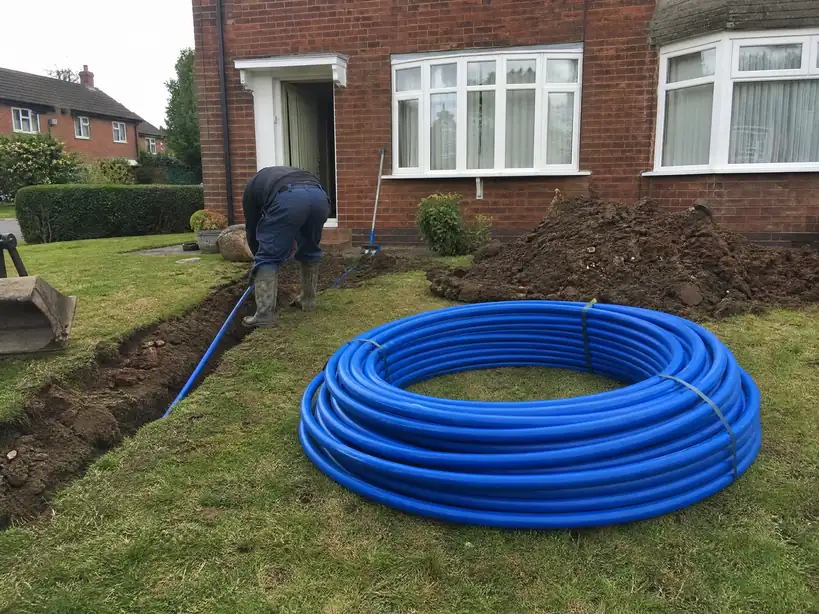
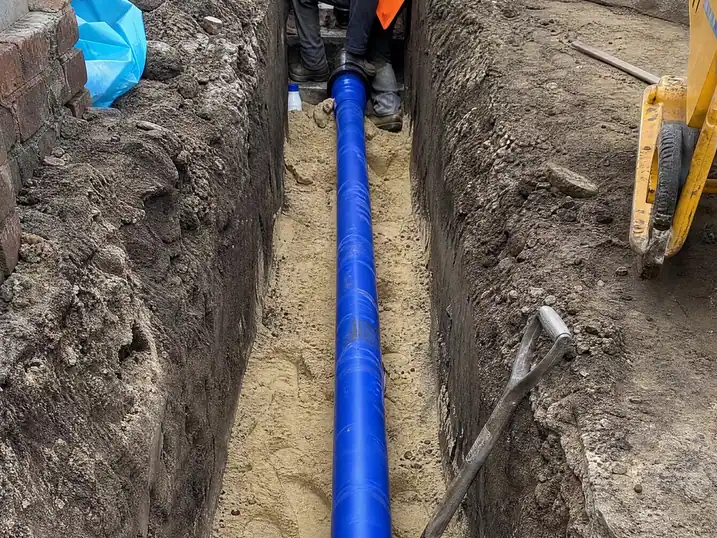
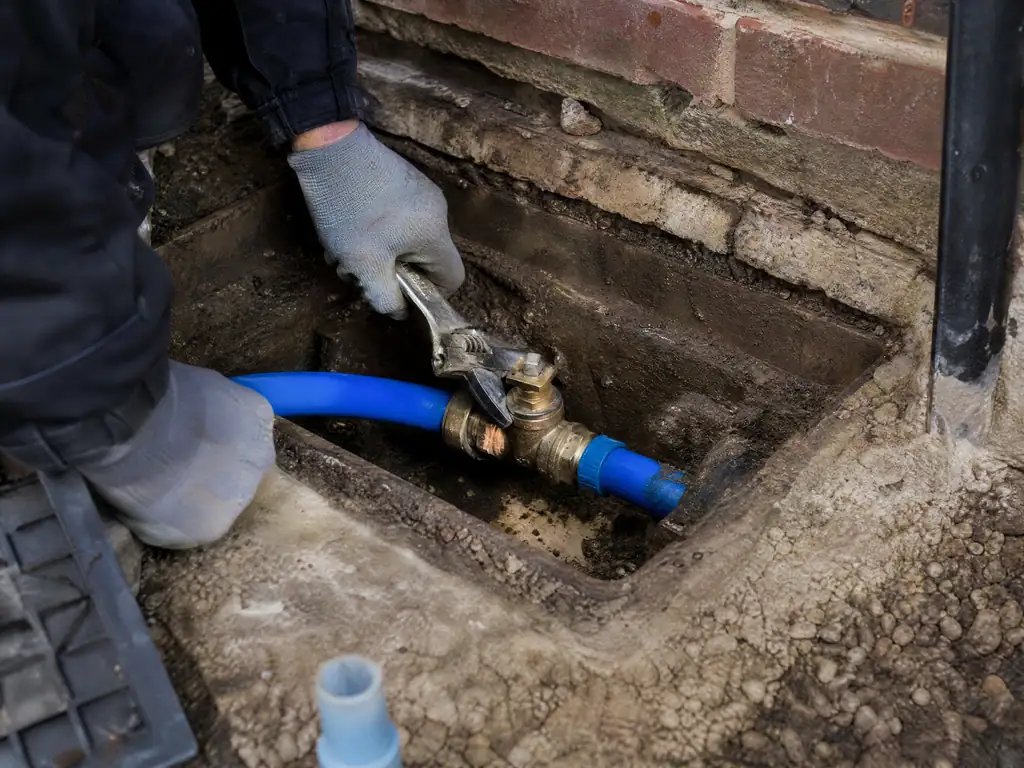
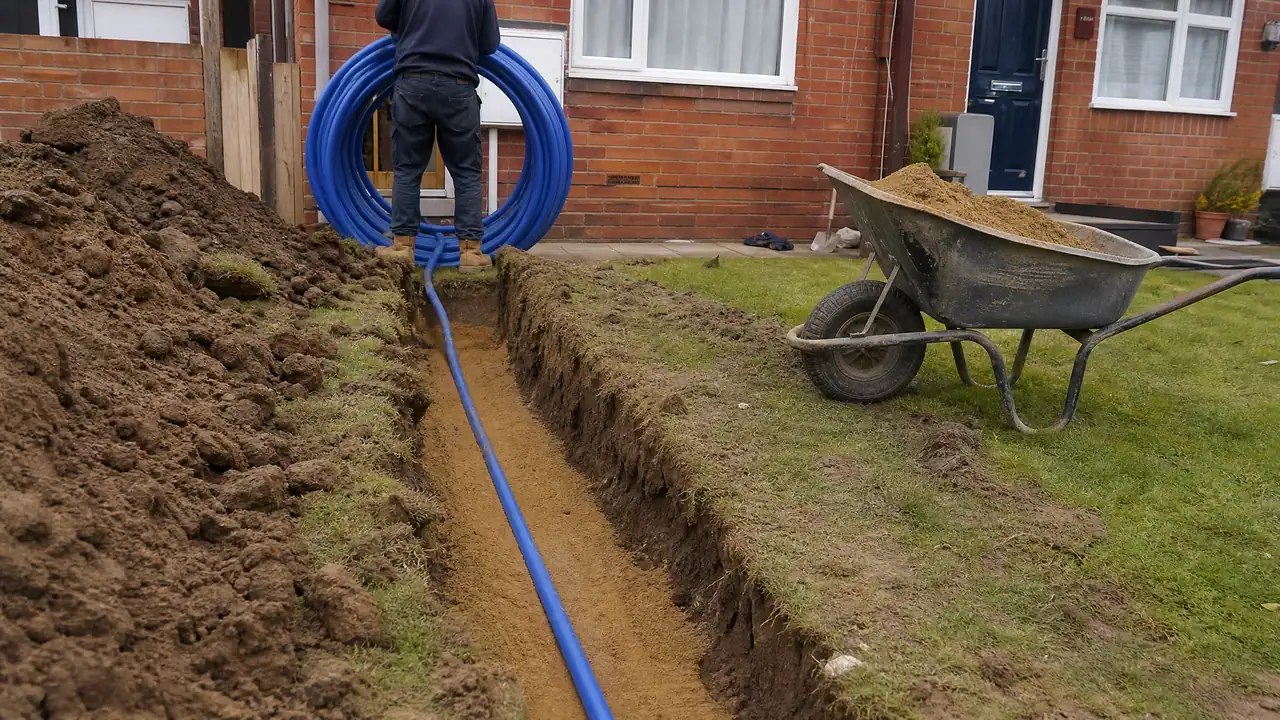
The new pipe runs from the boundary stop tap, where Severn Trent‘s side ends, to the stop tap inside your house. It is blue MDPE plastic, the standard material for underground cold water supplies. Under the Water Supply (Water Fittings) Regulations 1999 it is laid between 750mm and 1,350mm below finished ground level, deep enough to stay clear of frost and garden work.
The old pipe is disconnected and usually left in the ground. Pulling it out rarely achieves anything and means digging the whole route.
Trench or mole
There are two ways to lay the new pipe.
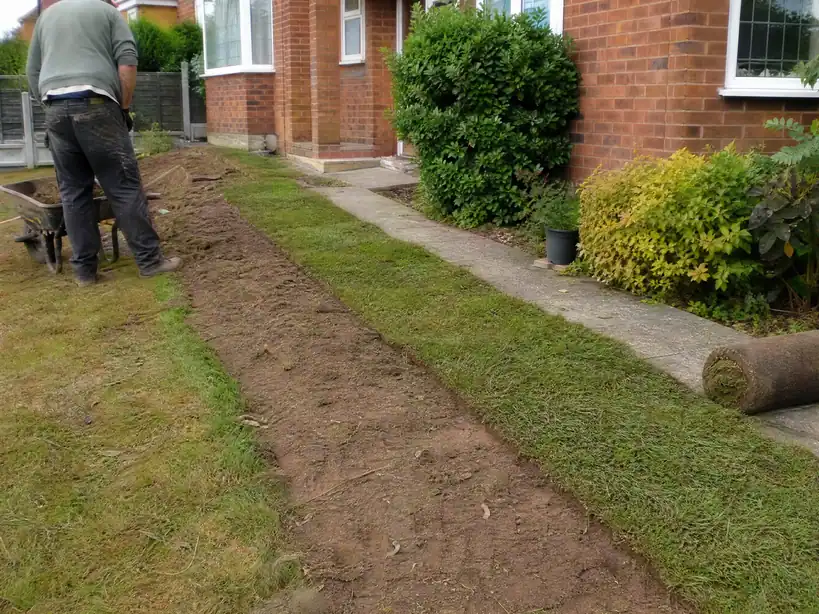
An open trench is simplest across lawns and borders. It is dug to depth along the route, the pipe is bedded in sand, and the trench is backfilled.
Moling pushes a pneumatic mole through the ground from one pit to another, pulling the new pipe behind it. It leaves the drive, path or lawn in between untouched. It suits runs under block paving, tarmac and concrete, and needs ground without large obstructions. Water pipe moling covers it in detail.
You get both methods priced where both would work.
Lead and shared supplies
If the old pipe is lead, don’t replace it in isolation. Under Severn Trent‘s Lead Replacement Scheme, homes built before 1970 may have lead pipes. Once you replace the lead inside your boundary, Severn Trent can give you a free new connection and replace its lead up to the boundary. The connection can take up to 16 weeks, so it is worth arranging early. See lead pipe replacement.
On a shared supply the pipe may serve more than one house, so the neighbours need to agree before it is replaced. Shared supply pipe leaks explains how that usually works.
What it costs
Nottingham quotes for supply pipe replacement run £388–£598, and moling in Nottinghamshire is listed at £1,200–£3,000+. Severn Trent puts the upper end at up to £3,000. The length of the run, its depth, the surface on top and the method decide where your job sits. What supply pipe replacement costs breaks this down.
What's included
- Survey of the old pipe route, material and both stop taps
- Choice of open trench or moling, with prices for each
- New MDPE supply pipe from boundary to house
- Laid 750mm–1,350mm below finished ground level
- Connection at the boundary side and at the internal stop tap
- Pressure test before anything is backfilled
- Old pipe left safely disconnected
- Surfaces reinstated and a written record of the new route
How the options compare
Method
- Do it yourself
- Hire a digger and hope
- Dig-and-hope operator
- Trench everything
- Proper leak detection
- Trench or mole, whichever suits the ground
Drive and garden
- Do it yourself
- Dug up end to end
- Dig-and-hope operator
- Dug up end to end
- Proper leak detection
- Moling needs only two small pits
Depth
- Do it yourself
- Whatever is easiest
- Dig-and-hope operator
- Not always checked
- Proper leak detection
- 750mm–1,350mm, per the regulations
Lead pipe
- Do it yourself
- Missed
- Dig-and-hope operator
- Replaced, scheme not mentioned
- Proper leak detection
- Replaced, with the free reconnection arranged